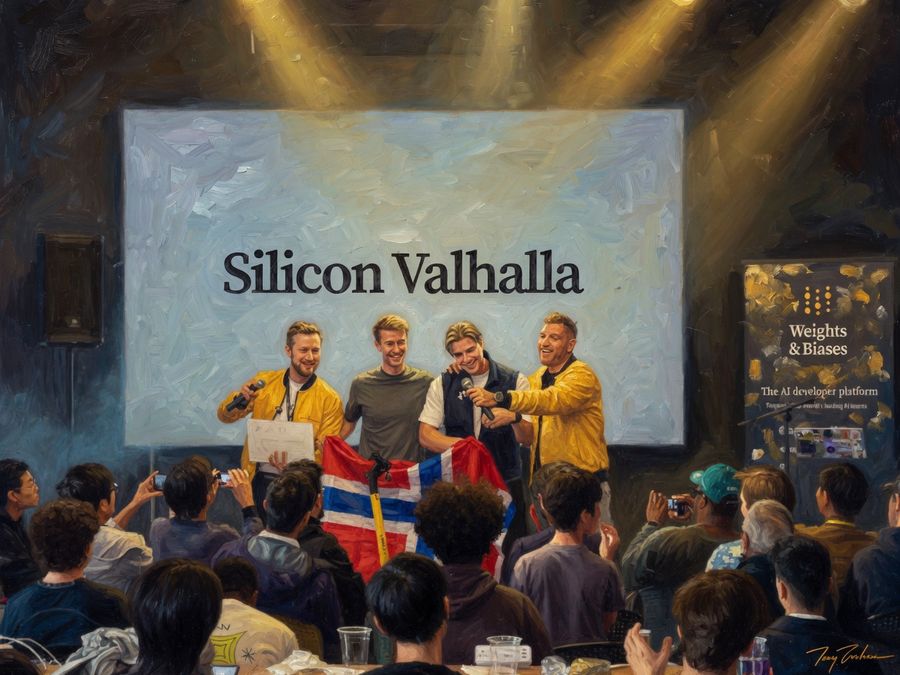
Norwegian AI Championship.
Two thousand five hundred builders, 69 sleepless hours, and a night that showed Norway has national heroes outside of sport.
Red alert, said Nicolai Tangen. He said it on our stage that night, and he repeated it on NRK Debatten a few hours later. The future is moving, and too many Norwegian businesses are standing still on the platform, watching the train leave.
The Norwegian AI Championship started as a conversation over coffee in Trondheim. What if Norway had an AI contest that looked less like a hackathon and more like a national sporting event? What if the best builders in the country had a stage, a broadcast, a prize, and a reason to leave their desk and show up in person?
Three months later we had sixty teams signed up. Three weeks after that, 2,500 participants across Norway, with student organisations at NTNU, UiA, UiO and UiB hosting on-site meetups. The final was held in Oslo. The winners — Thobias and Jardar, both born in 2004 — took home 500,000 NOK and a train ride back north.
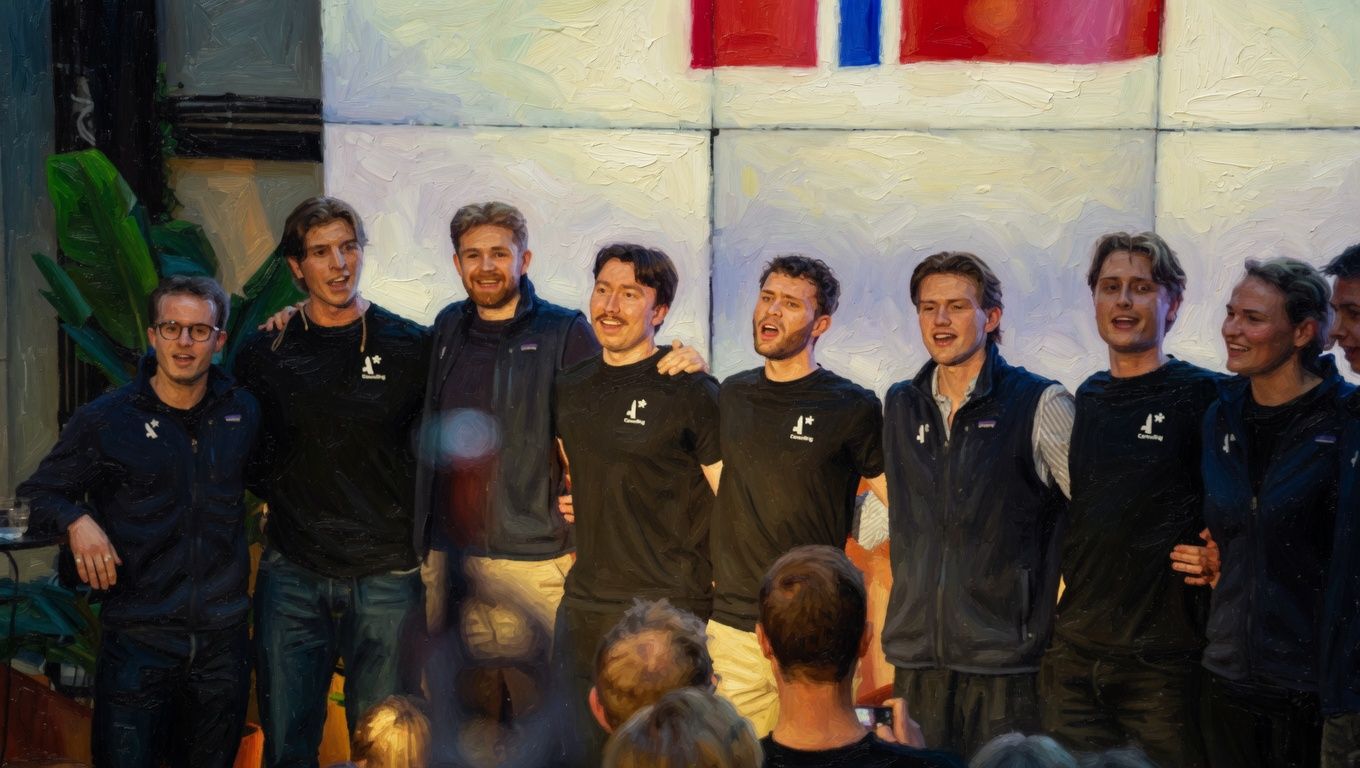
Why build this at all?
Because if you look at what Norway does well — trust, technical talent, strong buying power — and you ask where that energy currently points, it isn't at AI. Not yet. We wanted to change the centre of gravity by a small amount, in one night, in public, on a stage, with cameras on.
The format was simple: four rounds, each designed by a different Astar consultant, scored on technical merit and clarity of demo. A live audience vote in the final. No slide decks allowed on stage — only working systems.
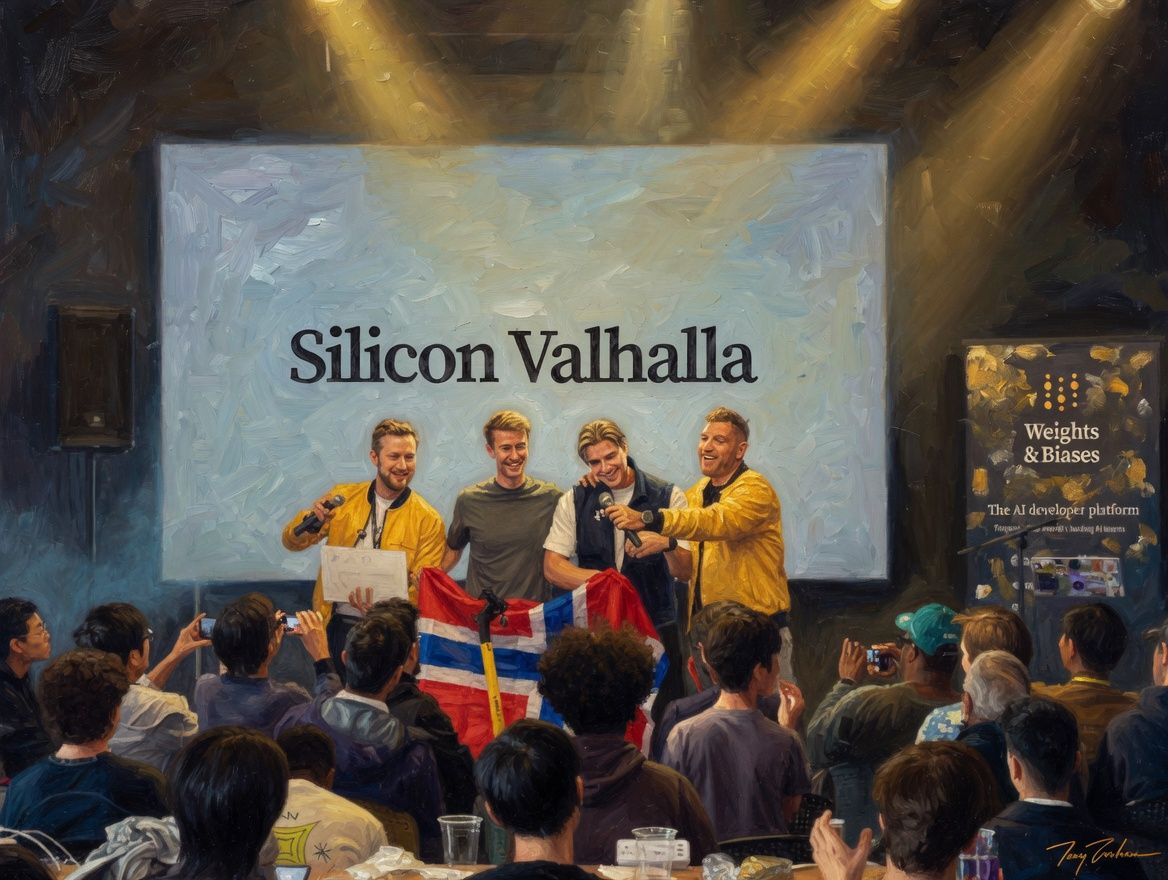
What actually happened
After 69 sleepless hours, three teams stood on the podium. Ave Christus Rex won first — and the U23 prize. People Made Machines took second. Håkon Kjelseth placed third, solo.
Norge har nasjonale helter også utenfor idretten.Digital Norwayon the night of the final
But the podium isn't the story. The story is what happened in the rooms before that — the students at Cogito NTNU who stayed up past four arguing about evaluation harnesses, the teams in Kristiansand debugging agent loops on a borrowed projector, the CTOs of listed companies showing up in person to watch.
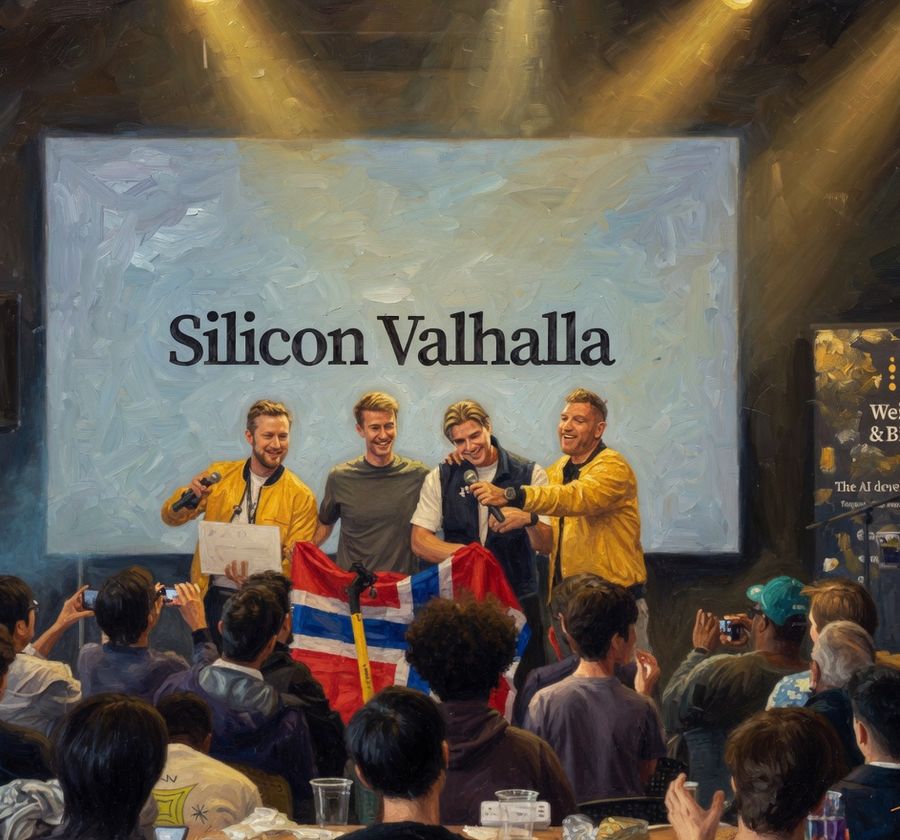
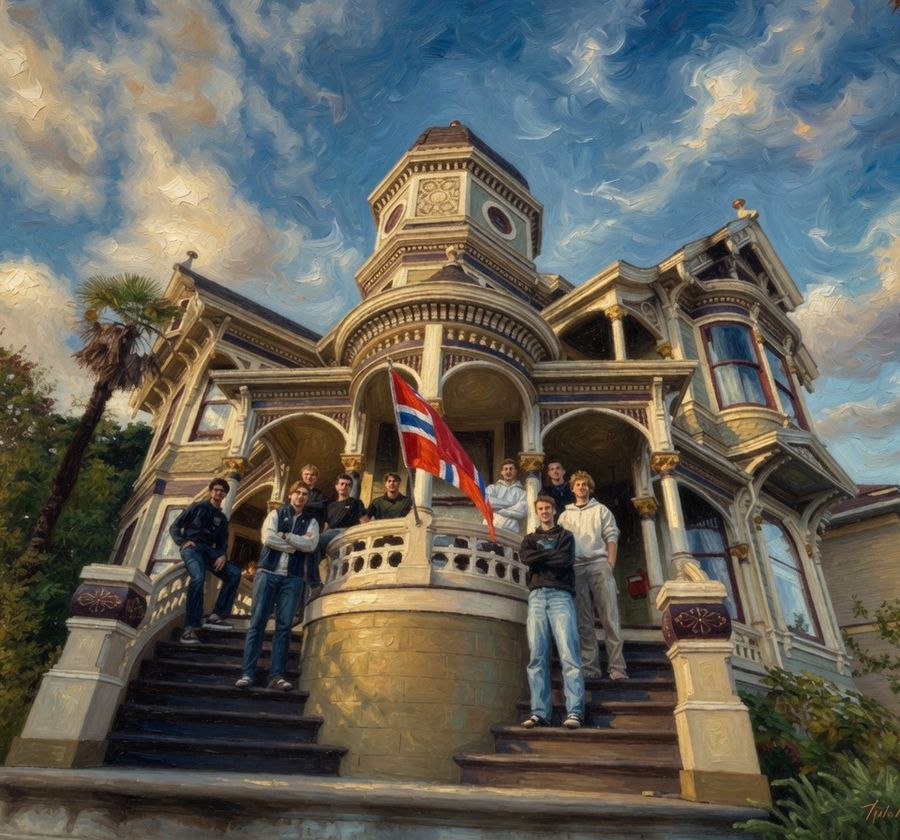
We think that matters. We think it's the start of something. And we'll be back next year, with a bigger stage, a bigger prize, and a louder question: what are you building?